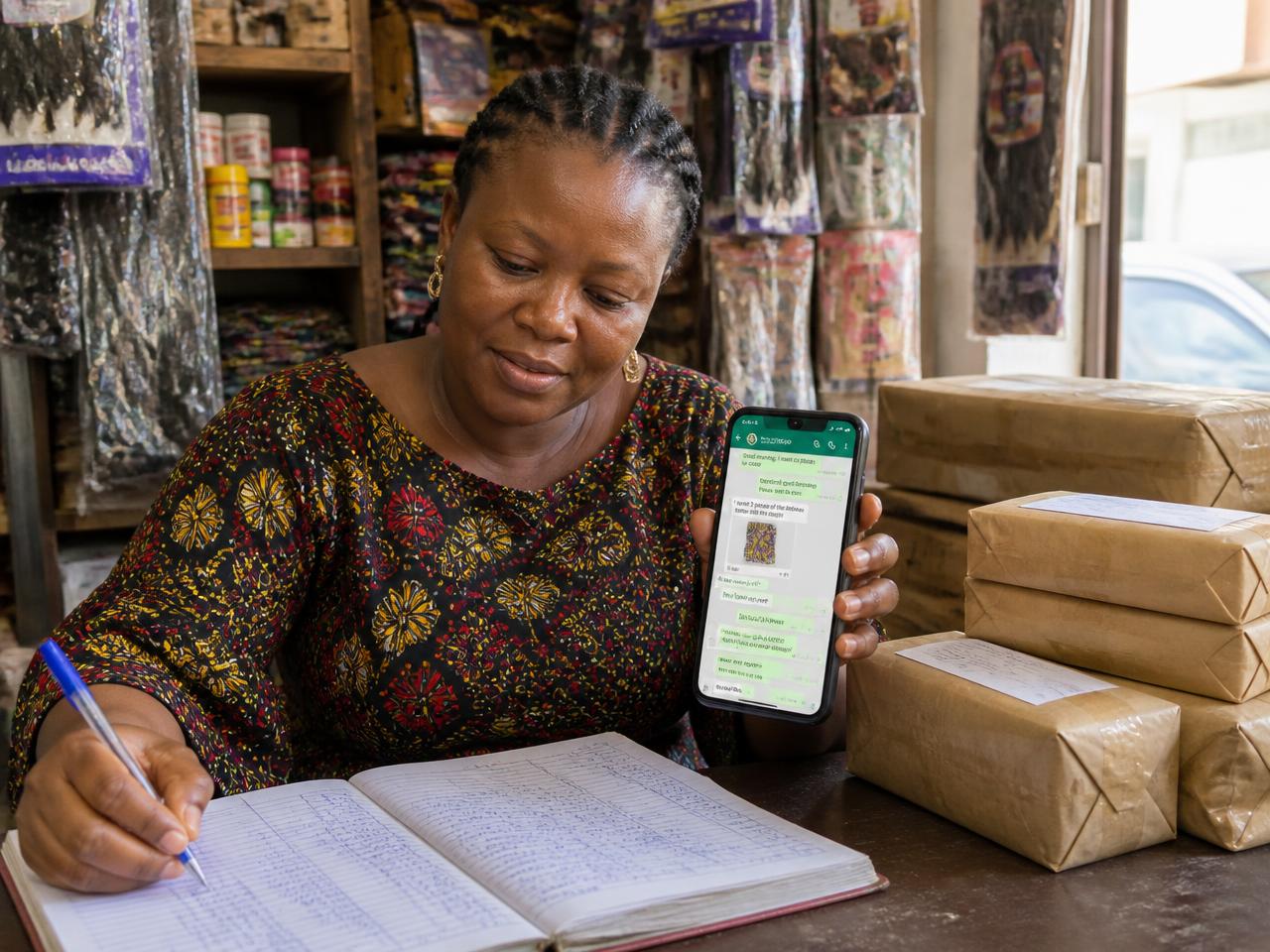
Wholesale on WhatsApp vs. Retail on WhatsApp: A Different Game Entirely

We work with two very different kinds of merchants on Storefront: retail brands selling ₦5,000–₦80,000 items to end consumers, and wholesalers selling ₦200,000–₦5,000,000 orders to shop owners, resellers, and businesses. The tools are the same. The playbook is not.
If you run wholesale like retail — or the other way around — you'll bleed either revenue or margin. Here's what changes.
Sales cycle: minutes vs weeks
Retail closes in one WhatsApp session. Buyer sees the ad, asks the price, confirms delivery zone, pays. 15 minutes. Wholesale takes 3–14 days. The buyer asks for a price list, negotiates volume discounts, discusses payment terms, requests samples, and only then places a first order.
Retail rewards speed. Wholesale rewards patience and structure.
In Storefront, we recommend retail merchants use the aggressive 30-minute nudge follow-up sequence. For wholesale, dial the AI's follow-up cadence down to 24-hour, 72-hour, and 7-day intervals — and always let a human handle price negotiation beyond the first quote.
Pricing: one price vs tiered pricing
Retail: one price on the catalogue, full stop. Discounts only via time-boxed promotions. Wholesale: at least three tiers — MOQ (minimum order quantity), mid-volume, and full pallet — with clear jumps. A buyer asking about 50 units should see a different unit price than a buyer asking about 500 units, automatically.
Storefront supports tiered pricing natively for wholesale merchants on the Business plan. If you're still quoting wholesale prices manually in chat, you're losing 4–8 hours a week to arithmetic and misquotes.
Payment terms: pay-in-full vs part payment
Retail: 100% upfront, always. Pay on delivery is the only exception, and only for orders under ₦40,000. Wholesale: 30–50% deposit, balance on delivery — or Net 7 to Net 30 for trusted repeat buyers.
This is where StoreFront Protect shines for wholesale. The buyer pays the deposit into escrow. The seller ships. The balance releases on delivery confirmation. Neither side is exposed to fraud on a ₦2M order.
Never extend credit to a wholesale buyer you haven't sold to at least 3 times. And never verbally — always via a signed order confirmation that Storefront generates automatically.
AI voice: enthusiastic vs professional
Retail AI can be warm, playful, use greetings like 'Hi love, welcome!'. Wholesale AI should be concise, professional, and use full sentences with business terminology: 'Good afternoon. Please find our pricing schedule for orders above 100 units attached.'
Storefront lets you set a business tone per phone number. If you run both retail and wholesale, run them from different WhatsApp numbers — same Storefront account, different AI personas. Mixing them on one number is the #1 mistake we see.
Follow-up angle: incentive vs relationship
Retail follow-up angles that work: free delivery, small discount, social proof, urgency. Wholesale follow-up angles that work: quarterly promotion planning, exclusive early access to new stock, a personal call from the founder, industry insights (like this blog).
Wholesale buyers are professionals. They don't care about a ₦2,000 discount on a ₦3M order. They care about supply reliability, credit terms, and whether you'll still be around in 18 months.
Delivery: same-day vs scheduled
Retail delivery must be fast — same day within Lagos, next day nationwide. Wholesale is scheduled — the buyer typically wants Wednesday afternoon at their warehouse. A dispatch rider on a bike is fine for retail. A booked pickup truck via a partner logistics company (GIG, Kobo360, or a private hauler) is right for wholesale.
Storefront's dispatch agent supports both — but the settings differ. Retail: 'assign nearest available rider'. Wholesale: 'notify me when a full-truck order is ready to schedule'.
Analytics: order count vs order value
Retail success = high order count, high frequency, thin margin per order. Track: cost per paid order, average order value, repeat purchase rate. Wholesale success = fewer, bigger, longer-tail orders. Track: average deal size, days-to-close, buyer lifetime value.
Watching the wrong metric will make you optimize the wrong thing. A wholesale merchant chasing high order count will burn margin on tiny orders that don't move the needle.
Can you run both on one Storefront account?
Yes — most of our largest merchants do. Use two WhatsApp Business numbers (Meta allows multiple per Business Manager), configure each with its own AI tone, catalogue slice, and follow-up cadence, and route the analytics into segments in the Storefront dashboard.
The mistake to avoid: trying to force one AI persona, one price list, and one follow-up cadence to serve both audiences. It fails at both ends.
Bottom line: the same underlying tool can serve wildly different businesses — but the settings, tone, cadence, and metrics must match the game you're actually playing. Get that right, and Storefront runs on autopilot. Get it wrong, and you'll blame the software for a strategy problem.