The Click-to-WhatsApp Playbook: How to Convert Meta Ads Into Paid Orders

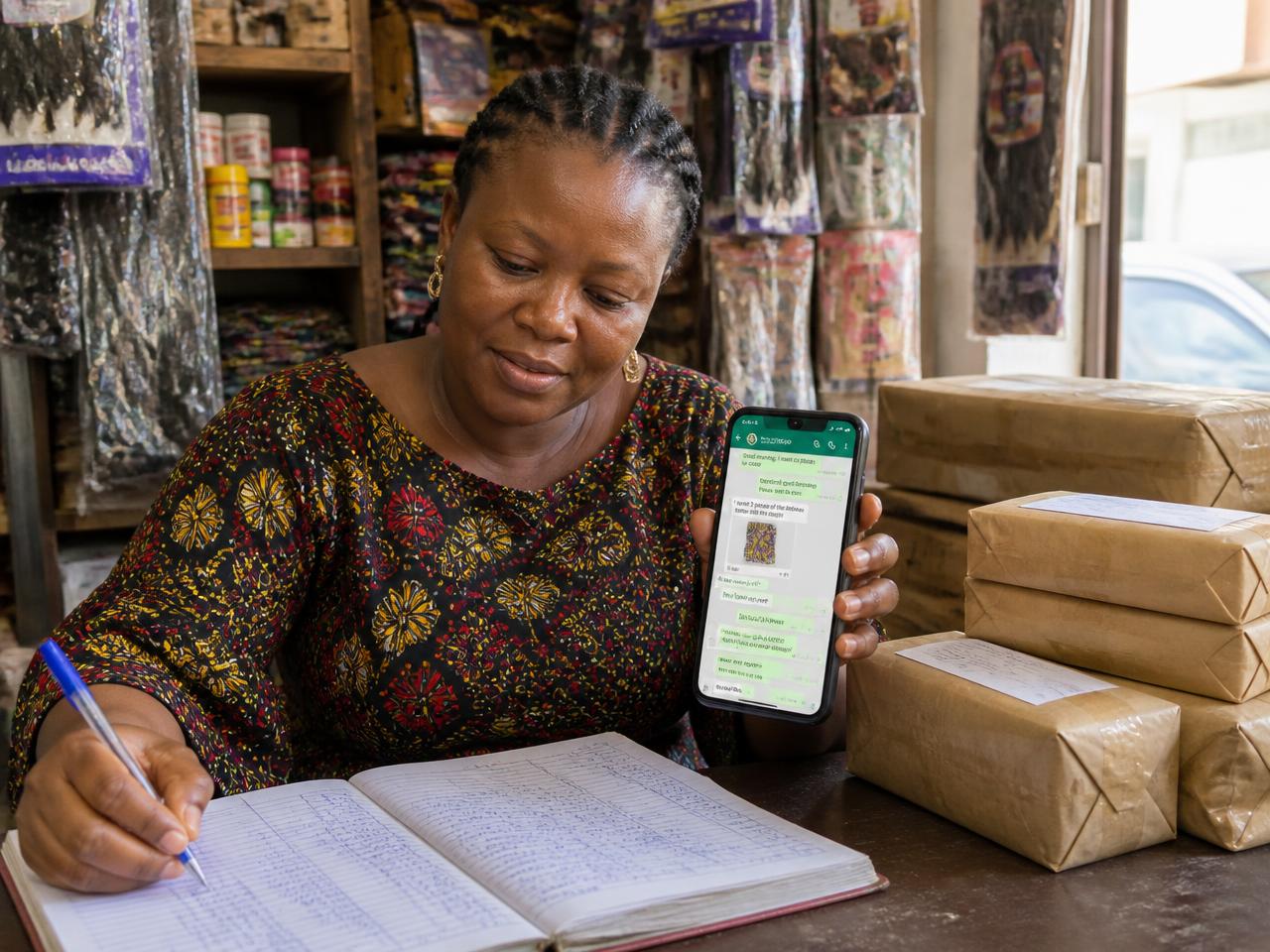
If you sell on WhatsApp in Nigeria, Click-to-WhatsApp (CTWA) ads are the single fastest way to fill your inbox with buyers. Meta reports that Nigerian businesses running CTWA ads generate 3 to 4 times more qualified conversations than link-in-bio traffic, and Storefront's own data across 1,200+ merchants backs this up: the average CTWA click costs between ₦25 and ₦180 depending on category, while the average paid order value sits between ₦18,000 and ₦95,000.
But most business owners still burn money on these ads. The reason is almost never the creative or the targeting. It is the chat that follows the click. That is where the deal actually lives — and that is exactly where 6 out of every 10 businesses lose it.
This playbook is the exact system we recommend to every Storefront merchant, from Yaba fashion brands to Lekki real-estate agents to Port Harcourt phone dealers. Follow it for 30 days and your ad spend starts feeling like an investment, not a gamble.
Step 1: Design the ad around one product, one promise
Do not run a generic 'Shop our store' ad. The Nigerian shopper scrolling Instagram or Facebook at 9pm is not looking for a store. They are looking for a specific problem to solve. Pick your best-selling item, show it clearly at eye level (no cluttered flatlay), and lead with the outcome the customer wants: same-day delivery in Lagos, pay on delivery, wholesale price, factory-fresh stock, free returns. One product, one promise, one call to action: 'Chat on WhatsApp'.
A quick test we run with merchants: if you can describe your ad in less than eight words to your cousin over the phone and they immediately understand what is on offer, the ad is ready. If you need two sentences, cut it down.
Step 2: Prepare your welcome message before you spend a naira
The moment a shopper clicks your ad, WhatsApp opens with a pre-filled message. If your AI assistant (or you) replies with 'Hello, how can I help you today?' the sale is already cold. The customer has to explain what they clicked, re-copy the product name, ask the price. Half of them drop off right there.
Instead, reply with four things in the first message: the product they clicked on, the price, the delivery time to a common area, and a payment option. Something like: 'Hi! Yes, the wireless earbuds are ₦12,500. Same-day delivery to Lagos mainland (₦2,000). Would you like to pay now with card, transfer, or on delivery?' That is one message and it moves the customer three steps forward instantly.
Storefront's AI does this automatically for every product you upload — it reads the ad's utm parameters, matches them to your catalogue, and greets the buyer with the specific product context.
Step 3: Ask two qualifying questions, then close
The two questions are location and delivery preference. That's it. Overthinking this stage is why 70% of WhatsApp chats stall. Once you know where the customer is and how they want to pay, send the payment link and confirm the order.
Do not ask 'what size?', 'what colour?', 'is this a gift?', 'how did you hear about us?' in the first five messages. Every extra question is a chance for the buyer to lose momentum. Save the nice-to-know details for a follow-up message after payment.
Step 4: Follow up within 30 minutes if they go quiet
This one habit alone recovers 20 to 30% of stalled chats. Not 24 hours later. Not the next morning. 30 minutes. The buyer is still in-app, still in the mood to shop, still has your product front of mind. A soft nudge — 'The bag is still available, want me to hold it for you?' — closes surprisingly often.
Storefront handles this automatically. If a chat has been silent for 30 minutes after a price quote, the AI sends a contextual nudge. After 24 hours it can offer a small incentive (free delivery, 5% off). After 48 hours it politely closes the loop. Merchants using this three-tier follow-up recover on average ₦180,000 of otherwise-lost revenue every month.
Step 5: Measure cost per paid order, not cost per click
Meta will show you cheap clicks all day. What matters is how many of those clicks became money in your bank. If your CTWA ad costs ₦40 per click and 1 in 20 clicks converts to a ₦25,000 order, your cost per paid order is ₦800 — brilliant. If your ad costs ₦25 per click but 1 in 400 clicks converts, your cost per paid order is ₦10,000 — bleeding money.
Storefront's dashboard shows cost per paid order per campaign in near real time so you know which ads to scale and which to kill. Meta Ads Manager alone cannot tell you this because it doesn't know which chat closed.
Step 6: Retarget the ones who did not buy
For every 100 people who click your ad, roughly 15 to 25 will buy in the first session. The remaining 75 to 85 are your goldmine. Meta lets you retarget them with a second ad, and because they already know your brand, the click-through rate is typically 2 to 3 times higher and the cost per click drops.
The retargeting message should NOT be the same as the acquisition ad. Try a different angle: social proof ('Just delivered to 12 customers in Ikeja this week'), urgency ('Last 8 pieces at this price'), or objection reset ('Now offering pay on delivery within Lagos').
The 30-day scale plan
Week 1: run one CTWA ad with a ₦2,000/day budget. Focus on getting the welcome-message flow, follow-up timing, and payment link right. Do not scale yet.
Week 2: increase to ₦5,000/day only if your cost per paid order is under ₦2,500. Introduce a second ad variant (different product, same structure).
Week 3: add a retargeting ad. Kill any ad variant with cost per paid order over ₦4,000.
Week 4: pick your best-performing ad and double the budget. Add a lookalike audience based on the customers who bought.
Businesses following this plan typically hit ₦1M–₦3M in monthly revenue from CTWA within 60 to 90 days, at a return on ad spend of 4x to 8x. It is not magic. It is discipline in the chat window.