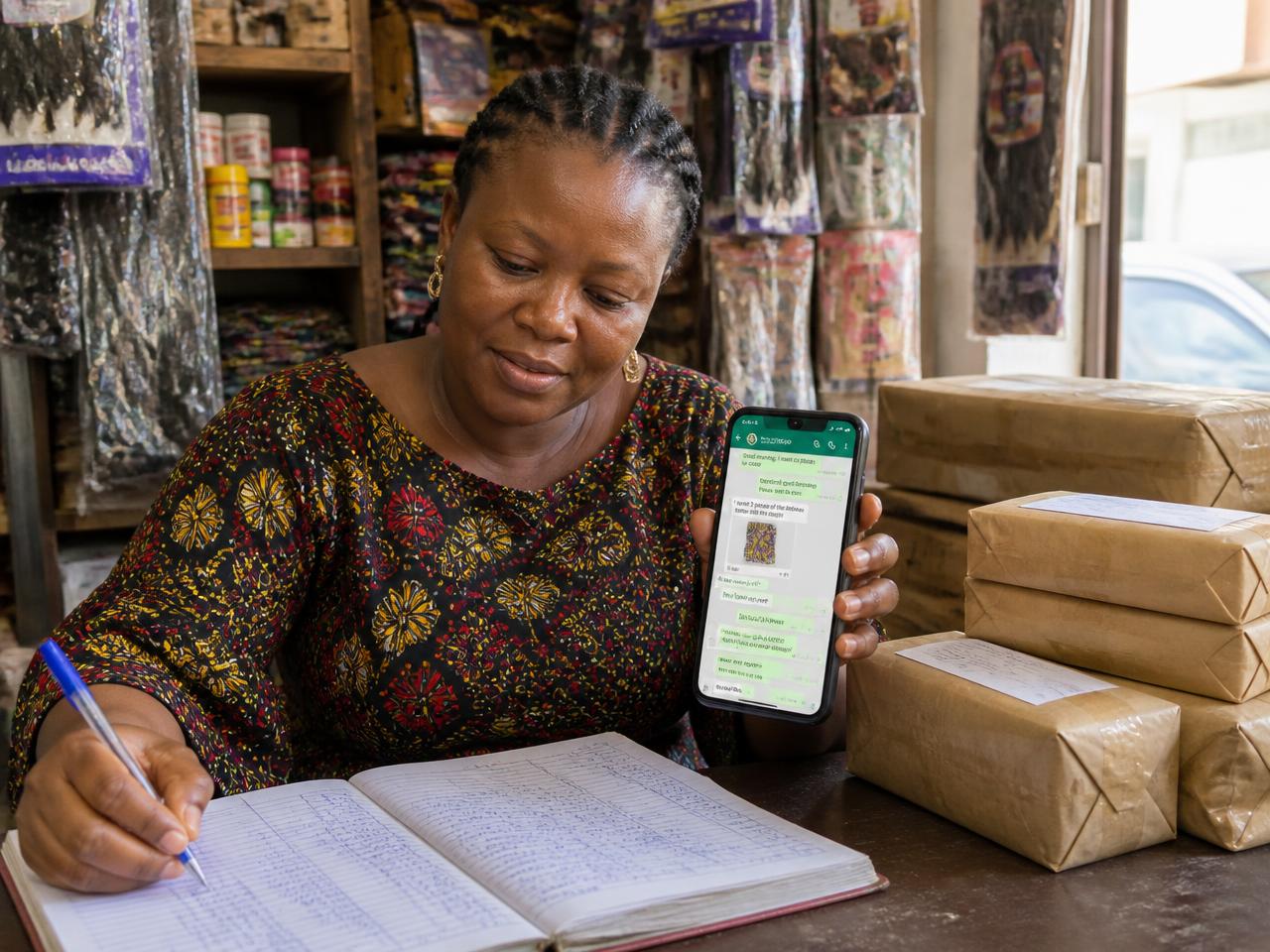
5 Follow-Up Sequences That Recover Lost WhatsApp Sales
Most WhatsApp sales are not lost. They are forgotten. The customer got distracted, the network dropped, dinner was ready, the baby cried, they wanted to check with their spouse. None of these mean 'no'. They mean 'not yet'.
Here are five follow-up sequences we've tested across hundreds of Nigerian businesses. Copy them, personalise the details, and watch stalled chats convert. Timing matters as much as the words — we've included the exact minute-mark to send each one.
1. The '30-minute nudge' (best for hot leads)
Timing: 30 minutes after the buyer has seen your price quote but not replied.
'Hi {name}, just checking if you got my last message. The {product} is still available at ₦{price} and I can arrange delivery to {area} today. Shall I hold it for you?'
Why it works: the buyer is still awake, still in-app, still remembers you. The word 'hold' creates gentle urgency without pressure. In our tests, this single message recovers 22% of stalled chats.
2. The '24-hour soft offer'
Timing: 24 hours after the last message, if no reply to the 30-minute nudge.
'Hi {name}, still thinking about the {product}? If you order today I can include free delivery within {city}.' Or: 'Hi {name}, we just restocked in your size — want me to reserve one for you?'
Why it works: small incentives close bigger deals than deep discounts. 'Free delivery' feels generous but rarely costs more than ₦2,000. Deep discounts train customers to wait for sales. Avoid them for warm leads.
3. The 'social proof' follow-up
Timing: 48 hours, if the 24-hour offer didn't move them.
'Hi {name}, we just delivered the same {product} to a customer in {area} this morning — she loved it. Do you still want yours? I can still get it to you today.'
Why it works: Nigerian buyers trust peer signals more than salesperson claims. A specific location detail ('a customer in Yaba') is far more powerful than 'other customers love it'. Never fake this — if you haven't sold to their area, use a real story from a similar area.
4. The 'objection reset'
Timing: 3 to 5 days after last contact.
'Hi {name}, I noticed you asked about price earlier. If budget is the concern, we now offer pay-on-delivery within Lagos, or you can pay in two installments through Paystack. Would either help?'
Why it works: most silent buyers have one specific unspoken objection. This message addresses the most common one (price/payment). Adapt for other patterns: 'We now offer next-day delivery' (for speed objections), 'We now include a 7-day return policy' (for trust objections).
5. The 'polite goodbye' (win-back)
Timing: 7 to 10 days after last contact.
'Hi {name}, I'm closing your order for now — but I've kept a small discount active on your account for 48 hours in case you change your mind. Link here: {short-link}. All the best either way.'
Why it works: the urgency of a real deadline + the ease of a saved cart + the polite exit removes the pressure. Some buyers were genuinely just busy and needed a clean re-entry point. Our data shows this recovers a further 4% of chats — small but pure profit.
When to STOP following up
Not every silence is recoverable, and one bad follow-up can burn a long-term customer. Stop following up when: (a) the buyer explicitly says 'not interested', (b) they haven't replied to three follow-ups in a row, or (c) they messaged you by mistake (usually clear within the first message).
Never send more than five follow-ups on a single order attempt. Beyond that, move them to your general marketing list and re-engage with a new offer 30 days later.
The full sequence in action
Here is what a real recovery timeline looks like for a customer named Chidinma who asked about a ₦25,000 handbag but went silent:
Day 0, 3:15pm — she asked, you replied with price and delivery. She read at 3:16pm, no reply.
Day 0, 3:45pm — 30-minute nudge: 'Still available, want me to hold it?'. She reads, still no reply.
Day 1, 4:00pm — soft offer: 'Order today for free delivery to Lekki.' Reply: 'Let me check with my sister and get back.'
Day 3, 2:00pm — social proof: 'Delivered a similar one to a customer in Lekki this morning.' Reply: 'Ok can I pay on delivery?'
Day 3, 2:05pm — you send the pay-on-delivery link. Order confirmed.
That is ₦25,000 that would have been ₦0 without the sequence. Storefront's AI runs all five of these automatically based on conversation signals — you don't have to remember who to follow up with, when, or what to say. On average, our merchants recover ₦140,000 to ₦380,000 of otherwise-lost monthly revenue this way.